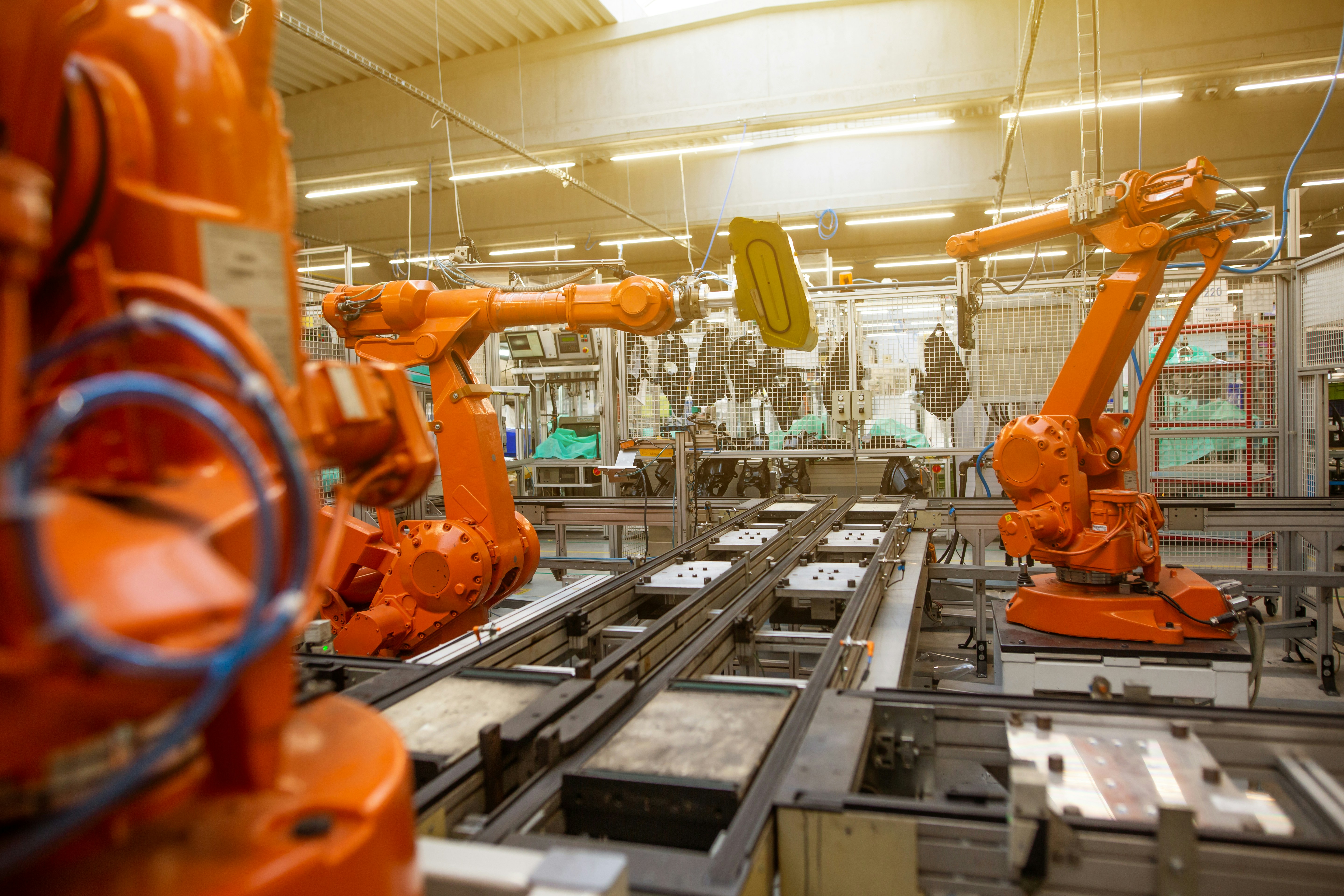
Be at the heart of actionFly remote-controlled drones into enemy territory to gather vital information.

Apply Now

Field Service Engineer

Birmingham
2 months ago
Applications closed

Related Jobs

View all jobs

Field Service Engineer

Field Service Engineer

Field Service Engineer

Field Service Engineer

Field Service Engineer

Field Service Engineer

Service Engineer / Field Service Technician / Compressor Engineer required to join a global, market leading compressed air solutions provider.
 
The Successful Service Engineer / Field Service Technician / Compressor Engineer will provide electrical and mechanical repair, service and maintenance on compressed air and air filtration equipment at customer sites across UK, predominantly in the West Midlands. Training provided.
 
The Service Engineer / Field Service Technician / Compressor Engineer will ideally have a service background in mechanical engineering such as compressors, filtration, HVAC, industrial refrigeration, pneumatics, hydraulics, nitrogen generators, pipework, vacuum pumps, vacuum systems, valves, pumps, motors, rotating equipment, robotics, or transferable electromechanical engineering products.
 
Package

£35,000-£45,000 depending on experience
Company van 
Company phone and laptop
22 days holiday + bank holidays (raising with 1 day each of tenure) (Extra day off after 10 years to Celebrate your Birthday)
Company pension 
Generous Overtime Available
Annual Pay increase to keep salary above the average benchmarkService Engineer / Field Service Technician / Compressor Engineer Role

To provide electrical and mechanical repair, service and maintenance of compressed air and air filtration equipment at customer sites into various industries.
The Compressor Service Engineer will undertake planned and preventative maintenance, provide advice, diagnostics, fault finding of compressed air systems, vacuum pumps, blowers & dryers, air filtration, refrigeration and other compressed air products.
Maintain, repair and install air compressors, vacuum pumps, blowers & dryers, filtration and other compressed air and pneumatic equipment in and around the West Midlands.
Service and repair of compressed air systems into all forms of the manufacturing industry.
Commutable to the office 1 or 2 days per week, on the outskirts of Birmingham. 
Liaise with various engineering departmentsService Engineer / Field Service Technician / Compressor Engineer Requirements

Proven diagnostic skills on complicated mechanical engineering systems. Full product training provided.
Experience as a Field Service Engineer / Service Engineer / Service Technician / Installation Engineer / Compressor Engineer / Multiskilled Engineer /  Mechanical Engineer / Electrical Engineer / M&E Engineer or similar.
The ability in maintaining good professional working relationships with existing and new customers.
Field servicing background in electrical or mechanical engineering such as compressors, filtration, HVAC, industrial refrigeration, pneumatics, hydraulics, nitrogen generators, pipework, vacuum pumps, vacuum systems, valves, pumps, motors, rotating equipment, hydraulics, pneumatics, robotics or transferable electromechanical engineering equipment.
A technical engineering degree / qualification, apprentice trained, FGas or similar would be advantageous.
Willingness to travel and commute to customer sites across the Midlands, predominantly the West but with further travel occasionally required


Subscribe to Future Tech Insights for the latest jobs & insights, direct to your inbox.

By subscribing, you agree to our privacy policy and terms of service.

Industry Insights

Discover insightful articles, industry insights, expert tips, and curated resources.

Robotics Hiring Trends 2026: What to Watch Out For (For Job Seekers & Recruiters)

As we move into 2026, the UK robotics jobs market is in a strange but interesting place. On one hand, UK manufacturers, logistics firms and warehouses must automate to stay competitive, tackle labour shortages and meet productivity and net-zero targets. On the other hand, the UK still lags badly behind peers in robot adoption, with relatively low robot density in factories compared with other advanced economies – which is both a challenge and a massive opportunity. The National Robotarium +1 Add in AI, computer vision and edge computing, and you get a robotics landscape that is: More selective in hiring. More focused on real operational outcomes. More integrated with software, data and safety standards. Whether you are a robotics job seeker planning your next move, or a recruiter building automation and robotics teams, this guide explores the key robotics hiring trends for 2026.

Robotics Recruitment Trends 2025 (UK): What Job Seekers Need To Know About Today’s Hiring Process

Summary: UK robotics hiring has shifted from toolbox checklists to capability‑driven evaluation that emphasises deployed systems, safety, reliability and total cost of ownership. Employers want proof you can ship and sustain robots in production—industrial arms & cobots, AMRs/AGVs, field robots, surgical/med‑tech, warehouse automation, inspection & maintenance. This guide explains what’s changed, what to expect in interviews and how to prepare—especially for robotics software engineers (ROS/ROS 2), perception/vision engineers, controls & motion planners, mechatronics & embedded, safety & compliance, test/V&V, DevOps/SRE for fleets, and robotics product managers. Who this is for: Robotics software/perception/controls engineers, mechatronics & embedded, simulation & test, DevOps/SRE for robotics fleets, HRI/UX, safety/compliance, field/commissioning engineers, and product/technical programme managers in the UK.

Why Robotics Careers in the UK Are Becoming More Multidisciplinary

Robotics used to be the domain of mechanical, electrical and software engineers. In the UK today, robotics is more than motors and control loops — it’s about perception, interaction, trust, regulation and integration into human environments. That evolution means robotics careers are becoming more multidisciplinary. Modern robots interact with people, collect data, operate under constraints, and often assist in safety-critical environments (healthcare, manufacturing, transport). So engineers now collaborate closely with legal, ethical, psychological, linguistic and design experts. In this article, we explore why UK robotics careers are evolving into multidisciplinary roles, how law, ethics, psychology, linguistics & design intersect with robotics, and how job-seekers and employers can adapt to this shift.