

Be at the heart of actionFly remote-controlled drones into enemy territory to gather vital information.

Apply Now

Electrical Maintenance Technician

Burton upon Trent
5 months ago
Applications closed

Related Jobs

View all jobs

Maintenance Technician (Contract)

Maintenance Engineer

Maintenance Engineer - Mechanical/Multiskilled

Maintenance Technician

Maintenance Technician

Plant Maintenance Engineer

Electrical Maintenance Technician

4 on 4 of days and nights (rotating every 2 weeks)

Burton upon Trent

£47,379

Benefits;

Employer pension contributions up to 6%, private healthcare, life insurance, healthcare cashback scheme & health benefits portal.

Job Summary
Multi-skilled Maintenance with both mechanical and electrical responsibilities. Reporting to the Site Manager/Supervisor, the Engineer will be eager though safety conscious, with a track record of owning problems and taking them through to successful completion.

Key responsibilities

  • Day to day maintenance of site MHE to a high standard,

  • Look to continuously improve all aspects of new and old equipment, be health and safety conscience.

  • Work against timeframes to complete reactive repairs.

  • Interact with on-site management keeping them informed of repair and maintenance progression and address their concerns in a professional manner.

  • Service and repair current installed products and demonstrate hands on ownership of issues to achieve a fast resolution.

  • Able to interpret electrical circuit diagrams and work with 415V motor controls.

  • Appreciate Health & Safety considerations and be able to carry out risk assessments

  • Mechanical aptitude including the ability to read assembly drawings

  • Operate hand tools and be able to assemble parts onto equipment

  • Able to follow set up instructions, assembly drawings and check lists

  • Excellent customer service skills for both internal and external customers

  • Appreciation of control systems

  • Be willing to learn and adapt to changing role requirements

  • Appreciation of Cultural Diversity

  • Able to effectively present a KPI based monthly review to key stakeholders

    Skills, qualifications and experience

  • NVQ/BTEC/C&G Level 3 in an Electro-Mechanical Engineering discipline

  • Understanding of PLC’s and their function

  • Pneumatic and Hydraulic knowledge beneficial.

  • Computer literate with basic Microsoft Office skills.

  • Use of CMMS system and engineering stores

  • HNC/HND equivalent is desirable

    Experience in the following will be advantageous:

    Distribution| FMCG | Automation | Manufacturing | Production | Conveyors | Machinery | Material Handling | Baggage Handling | Packaging Machinery | Cranes | MHE | Airports | PLC's / Control Systems | Pneumatics | Hydraulics | Motors | Drives | Navy | Army | RAF | REME | Marines | Armed Forces |

    Suited candidates previously hold roles such as:

    | Maintenance Technician | Maintenance Engineer | Electrical Engineer | Mechanical Engineer | Automation Engineer | Electrical Technician | Mechanical Technician | Electro-mechanical Technician | Marine Technician | Marine Engineer | Avionics Technician | Avionics Engineer | Aircraft Engineer | Aircraft Technician | Robotics Technician | Robotics Engineer | Multi-skilled Engineer | Multi-skilled Technician |

    Application Process:
    If you have the above skills and wish to be considered for this position or find out more details then please submit your CV.

    We will endeavour to contact all applicants however if you do not hear from me within two weeks then unfortunately you have been unsuccessful

Subscribe to Future Tech Insights for the latest jobs & insights, direct to your inbox.

By subscribing, you agree to our privacy policy and terms of service.

Industry Insights

Discover insightful articles, industry insights, expert tips, and curated resources.

Robotics Hiring Trends 2026: What to Watch Out For (For Job Seekers & Recruiters)

As we move into 2026, the UK robotics jobs market is in a strange but interesting place. On one hand, UK manufacturers, logistics firms and warehouses must automate to stay competitive, tackle labour shortages and meet productivity and net-zero targets. On the other hand, the UK still lags badly behind peers in robot adoption, with relatively low robot density in factories compared with other advanced economies – which is both a challenge and a massive opportunity. The National Robotarium +1 Add in AI, computer vision and edge computing, and you get a robotics landscape that is: More selective in hiring. More focused on real operational outcomes. More integrated with software, data and safety standards. Whether you are a robotics job seeker planning your next move, or a recruiter building automation and robotics teams, this guide explores the key robotics hiring trends for 2026.
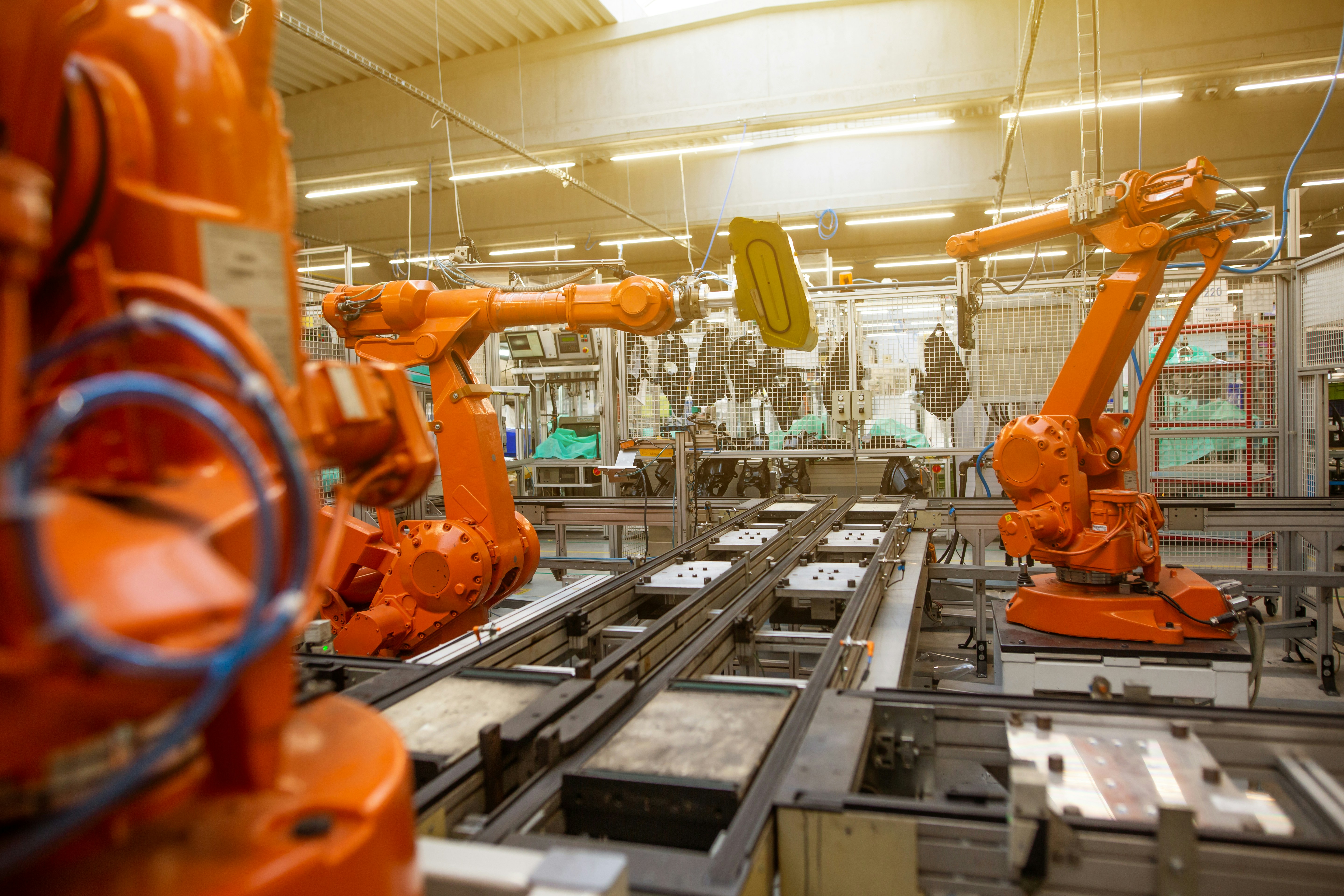

Robotics Recruitment Trends 2025 (UK): What Job Seekers Need To Know About Today’s Hiring Process

Summary: UK robotics hiring has shifted from toolbox checklists to capability‑driven evaluation that emphasises deployed systems, safety, reliability and total cost of ownership. Employers want proof you can ship and sustain robots in production—industrial arms & cobots, AMRs/AGVs, field robots, surgical/med‑tech, warehouse automation, inspection & maintenance. This guide explains what’s changed, what to expect in interviews and how to prepare—especially for robotics software engineers (ROS/ROS 2), perception/vision engineers, controls & motion planners, mechatronics & embedded, safety & compliance, test/V&V, DevOps/SRE for fleets, and robotics product managers. Who this is for: Robotics software/perception/controls engineers, mechatronics & embedded, simulation & test, DevOps/SRE for robotics fleets, HRI/UX, safety/compliance, field/commissioning engineers, and product/technical programme managers in the UK.

Why Robotics Careers in the UK Are Becoming More Multidisciplinary

Robotics used to be the domain of mechanical, electrical and software engineers. In the UK today, robotics is more than motors and control loops — it’s about perception, interaction, trust, regulation and integration into human environments. That evolution means robotics careers are becoming more multidisciplinary. Modern robots interact with people, collect data, operate under constraints, and often assist in safety-critical environments (healthcare, manufacturing, transport). So engineers now collaborate closely with legal, ethical, psychological, linguistic and design experts. In this article, we explore why UK robotics careers are evolving into multidisciplinary roles, how law, ethics, psychology, linguistics & design intersect with robotics, and how job-seekers and employers can adapt to this shift.