

Be at the heart of actionFly remote-controlled drones into enemy territory to gather vital information.

Apply Now

Field Commissioning Engineer

Sheffield
2 months ago
Applications closed

Related Jobs

View all jobs

Commissioning Engineers

Test & Validation Engineer

Field Service Engineer

Field Service Engineer

Field Service Engineer

CNC Field Service Engineer

Please note: applications are only being accepted from candidates based in the UK
To support their next ambitious and exciting phase of project delivery, our client is seeking an inquisitive and curious Field Commissioning Engineer to join the team.
The successful candidate will play a supporting role in the design, build, test, and ongoing support of automated electromechanical systems and subsystems. They will have hands-on skills to build and test designs as required, alongside advanced diagnostic and commissioning skills.
This role will involve liaising with internal and external stakeholders across Workshop, Software, and Service/Support functions to solve problems to the highest standard.
As a Commissioning Engineer, teamwork and communication will be essential. You will collaborate cross-departmentally to deliver technical projects, proactively sharing your skills and experience to provide feedback on areas of concern and suggestions for improvement. The ultimate goal is to accurately build and test electrical systems, ensure they are safe for use, and document processes effectively.
You will be an independent thinker who can identify the root causes of electrical and mechanical faults and implement solutions accordingly. In addition, you must be willing to travel for the installation of robotic automation systems at client sites.
As this role involves visits to client sites across several sectors, including defence, the successful candidate must be a British Citizen and able to obtain security clearance up to Developed Vetting (DV) level.
About Our Client
Our client is recruiting a Commissioning Engineer to join their growing team, working with a wide array of technologies and tools to solve engineering problems in the field of robotics and industrial automation.
They are an industrial automation specialist with many years of experience delivering state-of-the-art solutions to household name companies. With a world-leading reputation for solving difficult industrial problems, they specialise in robotics and the aerospace sector.
About You

Qualified to HNC in an electrical-focused course, or electrical apprentice trained, or equivalent level of experience
Strong ability to communicate at a high technical level, in both written and verbal English
Confident in reading and understanding technical electrical/mechanical drawings
Willingness, interest, and ability to rapidly learn new technology
Skilled at identifying root causes of electrical faults, using good working practices and industry-standard equipment
Working knowledge and appreciation of health and safety requirements
Full UK driving licence
Willing and able to travel to customer sites
Ability to obtain vetted security clearance/DBS checksWhat's on Offer

Competitive salary (based on experience)
Flexible working environment
25 days holiday + bank holidays
Occupational sick pay
Company pension
Free parking
Cycle to work scheme
Holiday buy/sell scheme
Friendly and supportive work environmentHow to Apply
To apply for the role of Commissioning Engineer, please submit your CV.
Email - (url removed) or Freddie Southall on (phone number removed)

Subscribe to Future Tech Insights for the latest jobs & insights, direct to your inbox.

By subscribing, you agree to our privacy policy and terms of service.

Industry Insights

Discover insightful articles, industry insights, expert tips, and curated resources.

Robotics Hiring Trends 2026: What to Watch Out For (For Job Seekers & Recruiters)

As we move into 2026, the UK robotics jobs market is in a strange but interesting place. On one hand, UK manufacturers, logistics firms and warehouses must automate to stay competitive, tackle labour shortages and meet productivity and net-zero targets. On the other hand, the UK still lags badly behind peers in robot adoption, with relatively low robot density in factories compared with other advanced economies – which is both a challenge and a massive opportunity. The National Robotarium +1 Add in AI, computer vision and edge computing, and you get a robotics landscape that is: More selective in hiring. More focused on real operational outcomes. More integrated with software, data and safety standards. Whether you are a robotics job seeker planning your next move, or a recruiter building automation and robotics teams, this guide explores the key robotics hiring trends for 2026.
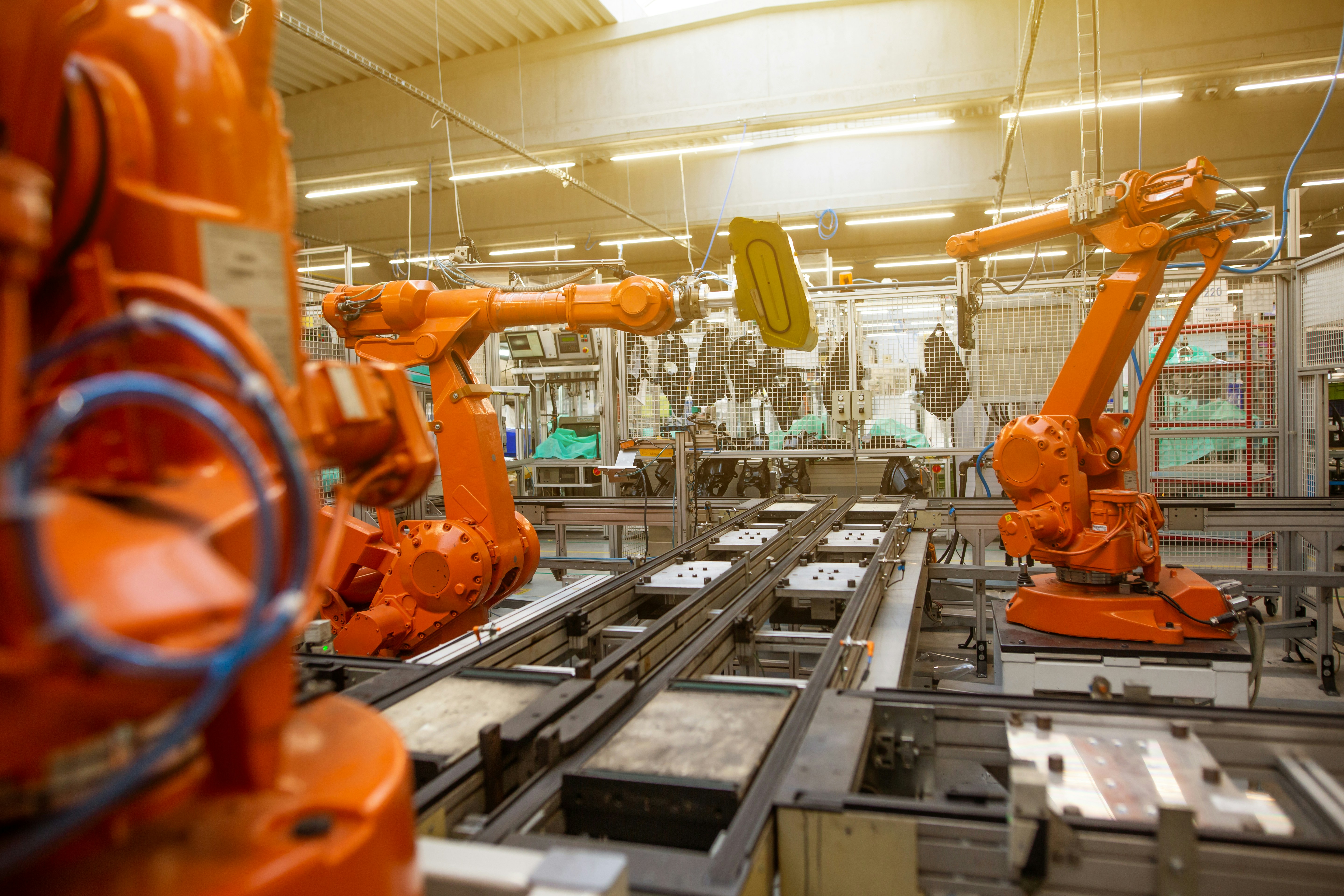

Robotics Recruitment Trends 2025 (UK): What Job Seekers Need To Know About Today’s Hiring Process

Summary: UK robotics hiring has shifted from toolbox checklists to capability‑driven evaluation that emphasises deployed systems, safety, reliability and total cost of ownership. Employers want proof you can ship and sustain robots in production—industrial arms & cobots, AMRs/AGVs, field robots, surgical/med‑tech, warehouse automation, inspection & maintenance. This guide explains what’s changed, what to expect in interviews and how to prepare—especially for robotics software engineers (ROS/ROS 2), perception/vision engineers, controls & motion planners, mechatronics & embedded, safety & compliance, test/V&V, DevOps/SRE for fleets, and robotics product managers. Who this is for: Robotics software/perception/controls engineers, mechatronics & embedded, simulation & test, DevOps/SRE for robotics fleets, HRI/UX, safety/compliance, field/commissioning engineers, and product/technical programme managers in the UK.

Why Robotics Careers in the UK Are Becoming More Multidisciplinary

Robotics used to be the domain of mechanical, electrical and software engineers. In the UK today, robotics is more than motors and control loops — it’s about perception, interaction, trust, regulation and integration into human environments. That evolution means robotics careers are becoming more multidisciplinary. Modern robots interact with people, collect data, operate under constraints, and often assist in safety-critical environments (healthcare, manufacturing, transport). So engineers now collaborate closely with legal, ethical, psychological, linguistic and design experts. In this article, we explore why UK robotics careers are evolving into multidisciplinary roles, how law, ethics, psychology, linguistics & design intersect with robotics, and how job-seekers and employers can adapt to this shift.