

Be at the heart of actionFly remote-controlled drones into enemy territory to gather vital information.

Apply Now

Multiskilled Maintenance Engineer

Stoke-on-Trent
1 month ago
Applications closed

Related Jobs

View all jobs

Multiskilled Maintenance Engineer

Multiskilled Maintenance Engineer

Maintenance Engineer - 6-2 | 2-10 | 10-6

Maintenance Engineer

Maintenance Shift Engineer

Maintenance Shift Engineer

MAINTENANCE ENGINEER

STOKE-ON-TRENT

DOUBLE DAYS - EARLIER FRIDAY FINISHES

£40,000 - £46,000

Opportunities to gain Electrical Training & Qualifications

We are looking for a Multiskilled Maintenance Engineer to join our client in Stoke-on-Trent You'll be maintaining and repairing a variety of equipment, including hydraulic and pneumatic systems, ensuring production runs smoothly in our established, engineering environment with a real mix of new automated machinery as well as traditional industrial machinery.

What's on offer:

Opportunities to develop your electrical skill set
Support to gain industry-recognised qualifications
A secure, long-term career within a traditional yet forward-looking businessThe Role:

Carrying out planned and reactive maintenance on workshop machinery
Fault-finding and repairing mechanical issues on Robotics, Hydraulics and Pneumatic systems.
Assisting with continuous improvement and reliability projects
Experience 3 phase wiring, and changing Electrical componentsAbout You:

Time-served/qualified in Engineering (apprenticeship or equivalent)
Strong background in industrial maintenance - Food, FMCG, Pharma, Automotive, Potteries etc
Willingness to learn and develop electrical skills
A problem-solver with a proactive, can-do attitudeIf you're looking for a role where you can combine your mechanical expertise with the opportunity to grow your electrical knowledge, then we'd love to hear from you.

If you are interested in this position please click 'apply'.

Hunter Selection Limited is a recruitment consultancy with offices UK wide, specialising in permanent & contract roles within Engineering & Manufacturing, IT & Digital, Science & Technology and Service & Sales sectors.

Please note as we receive a high level of applications we can only respond to applicants whose skills & qualifications are suitable for this position. No terminology in this advert is intended to discriminate against any of the protected characteristics that fall under the Equality Act 2010.

For the purposes of the Conduct Regulations 2003, when advertising permanent vacancies we are acting as an Employment Agency, and when advertising temporary/contract vacancies we are acting as an Employment Business

Subscribe to Future Tech Insights for the latest jobs & insights, direct to your inbox.

By subscribing, you agree to our privacy policy and terms of service.

Industry Insights

Discover insightful articles, industry insights, expert tips, and curated resources.

Robotics Hiring Trends 2026: What to Watch Out For (For Job Seekers & Recruiters)

As we move into 2026, the UK robotics jobs market is in a strange but interesting place. On one hand, UK manufacturers, logistics firms and warehouses must automate to stay competitive, tackle labour shortages and meet productivity and net-zero targets. On the other hand, the UK still lags badly behind peers in robot adoption, with relatively low robot density in factories compared with other advanced economies – which is both a challenge and a massive opportunity. The National Robotarium +1 Add in AI, computer vision and edge computing, and you get a robotics landscape that is: More selective in hiring. More focused on real operational outcomes. More integrated with software, data and safety standards. Whether you are a robotics job seeker planning your next move, or a recruiter building automation and robotics teams, this guide explores the key robotics hiring trends for 2026.
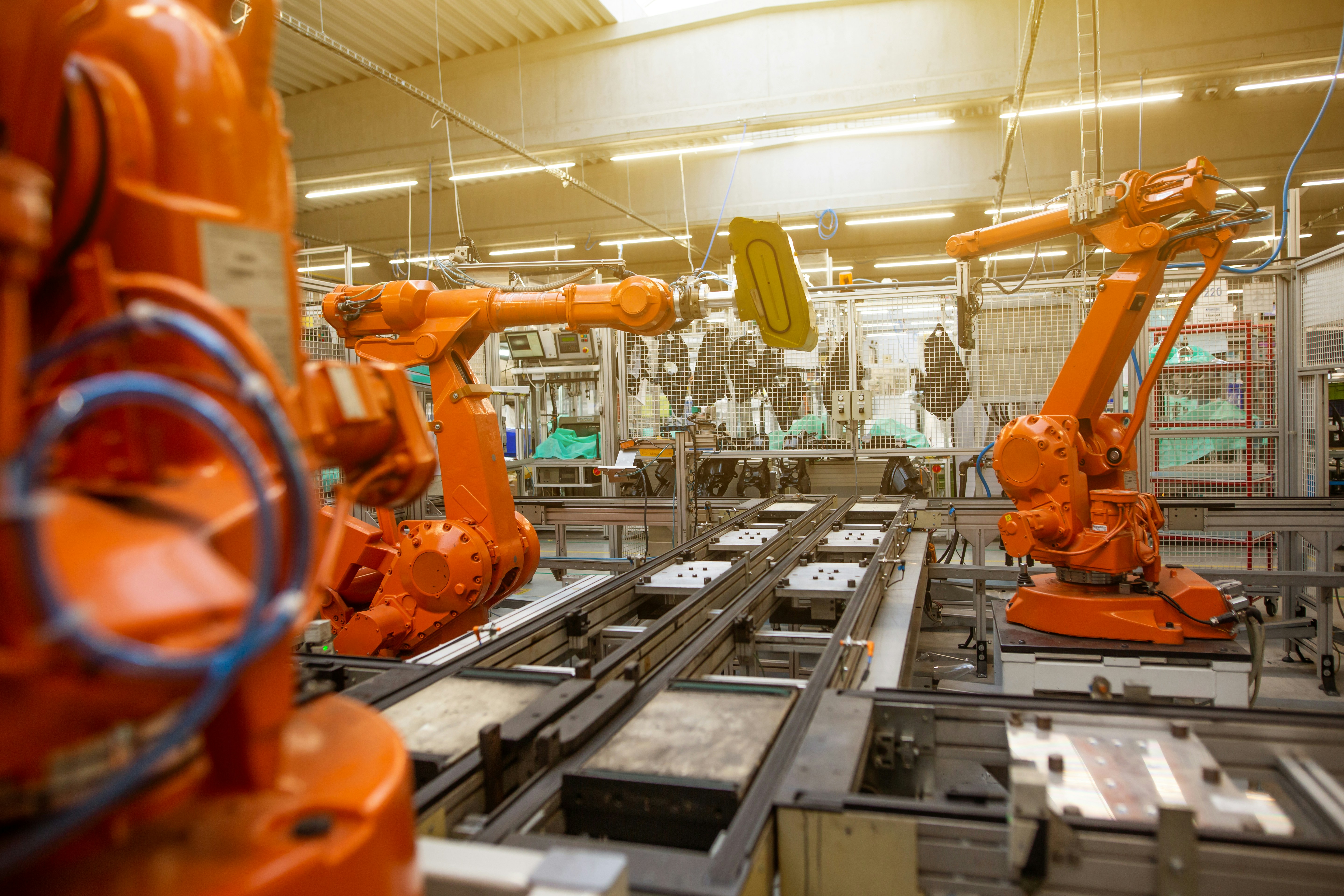

Robotics Recruitment Trends 2025 (UK): What Job Seekers Need To Know About Today’s Hiring Process

Summary: UK robotics hiring has shifted from toolbox checklists to capability‑driven evaluation that emphasises deployed systems, safety, reliability and total cost of ownership. Employers want proof you can ship and sustain robots in production—industrial arms & cobots, AMRs/AGVs, field robots, surgical/med‑tech, warehouse automation, inspection & maintenance. This guide explains what’s changed, what to expect in interviews and how to prepare—especially for robotics software engineers (ROS/ROS 2), perception/vision engineers, controls & motion planners, mechatronics & embedded, safety & compliance, test/V&V, DevOps/SRE for fleets, and robotics product managers. Who this is for: Robotics software/perception/controls engineers, mechatronics & embedded, simulation & test, DevOps/SRE for robotics fleets, HRI/UX, safety/compliance, field/commissioning engineers, and product/technical programme managers in the UK.

Why Robotics Careers in the UK Are Becoming More Multidisciplinary

Robotics used to be the domain of mechanical, electrical and software engineers. In the UK today, robotics is more than motors and control loops — it’s about perception, interaction, trust, regulation and integration into human environments. That evolution means robotics careers are becoming more multidisciplinary. Modern robots interact with people, collect data, operate under constraints, and often assist in safety-critical environments (healthcare, manufacturing, transport). So engineers now collaborate closely with legal, ethical, psychological, linguistic and design experts. In this article, we explore why UK robotics careers are evolving into multidisciplinary roles, how law, ethics, psychology, linguistics & design intersect with robotics, and how job-seekers and employers can adapt to this shift.