

Be at the heart of actionFly remote-controlled drones into enemy territory to gather vital information.

Apply Now

Automation Manufacturing Engineer

Stockport
1 month ago
Applications closed

Related Jobs

View all jobs

Automation Design Manager

Manufacturing Engineer

Senior Electronics Engineer

Head of Manufacturing Engineering

Technical Manager | Manufacturing | Engineering

Materials Planner/Buyer

Manufacturing Engineer

Stockport
Up to £55,000 plus excellent benefits including…

  • 25 days holiday + 8 bank holidays.
  • 7% employer pension contribution, 4% employee contribution.
  • 4 weeks sick pay after probation increasing to 8 weeks with service.
  • Cycle to work scheme.
  • Life assurance - 4x annual salary.
  • Half day Friday.
  • Wellness programme.

    Are you a hands-on engineer ready to take on a pivotal role in transforming manufacturing operations?

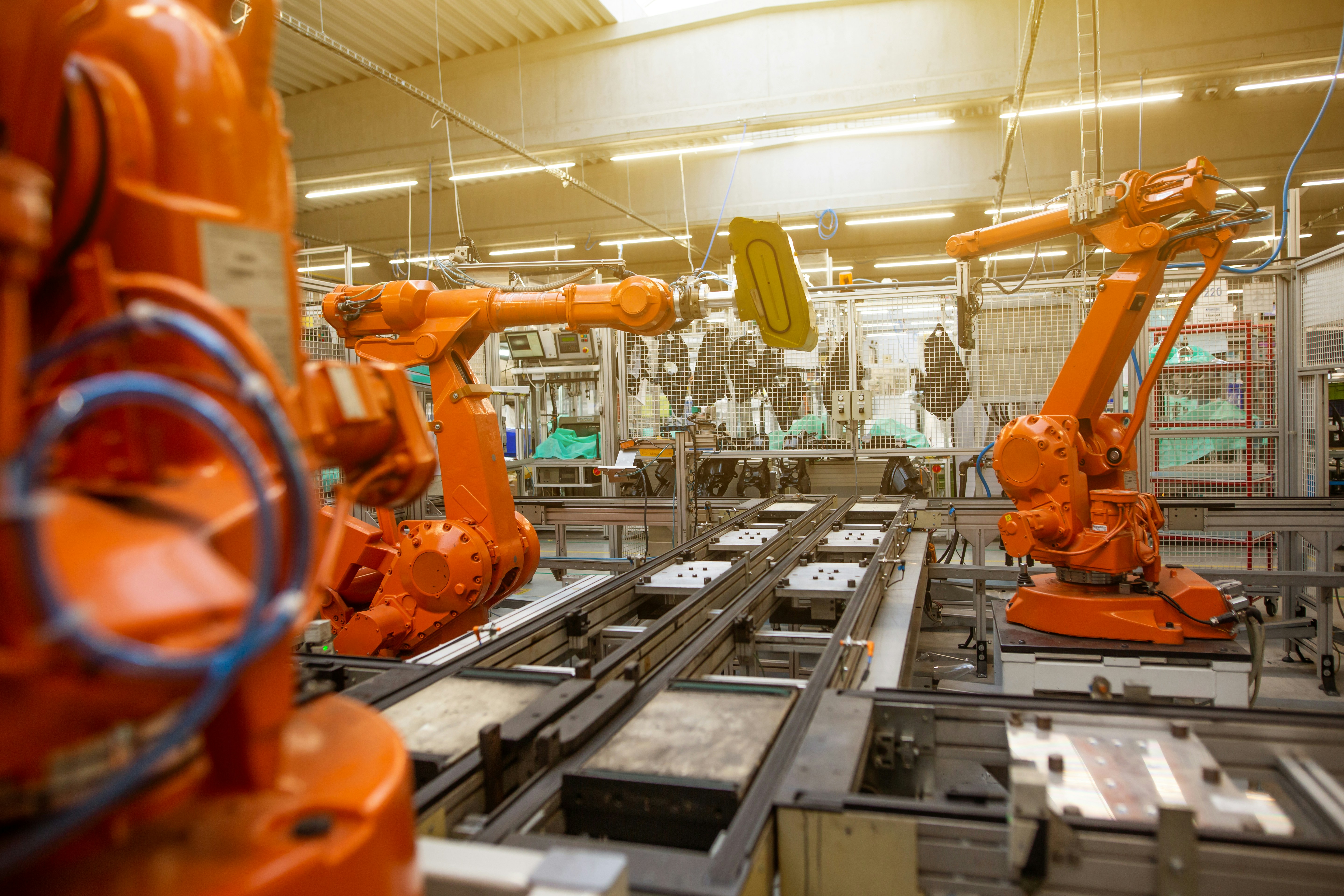
    We're looking for an Manufacturing Engineer to lead the planning and installation of robotic welding cells-a major capital investment project aimed at enhancing quality, repeatability, and efficiency across our fabrication lines.

    This is a unique opportunity to play a leading role in driving automation and continuous improvement within high-impact programmes.

    Key Responsibilities:

    Lead the Robotic Welding Cell Project - Manage all stages of the project, from planning and procurement through to installation, commissioning, and full integration into the manufacturing workflow.

    Develop Manufacturing Solutions - Resolve build and quality issues with practical, shop-floor-tested solutions across fabrication and assembly environments.

    Implement Automation - Explore and deliver automation strategies that drive improvements in welding consistency, safety, and throughput.

    Process Optimisation - Improve dimensional stability through effective jig and fixture design, and data-driven manufacturing process enhancements.

    Reduce Build Hours and Waste - Apply lean principles to reduce cycle time, tact time, and improve first-time pass rates.

    Support Capital Investment Initiatives - Collaborate with cross-functional teams to deliver successful outcomes on strategic investment projects.

    Design for Manufacturability - Provide early input into product design to ensure ease of manufacture and assembly.

    Standardise and Document - Develop and maintain standard operating procedures and technical documentation.

    What We're Looking For:

    Degree or HND in Mechanical or Manufacturing Engineering (or equivalent).
    Demonstrated success delivering large-scale automation or capital projects.
    Experience & knowledge of robotic systems.
    Deep understanding of welding processes.
    Skilled in interpreting welding drawings and GD&T.
    Strong data analysis capabilities related to cycle time, RFT, and tact metrics.
    Excellent communication, problem-solving, and cross-functional collaboration skills.
    Practical understanding of lean manufacturing and health & safety standards.
    Knowledge of the latest developments in robotic welding and fabrication.

    Why Join Us?

    You'll be part of a forward-thinking team at the forefront of automation and modern manufacturing, working on projects that directly impact the delivery of advanced engineering solutions. We offer a dynamic environment, opportunities for professional growth, and a chance to lead in the adoption of cutting-edge technologies.

    At Morgan Ryder we can provide you with a full range of employment opportunities from short term and fixed term temporary vacancies to permanent positions.

    We recruit for companies that operate in the following industries: Defence Equipment, Food and Drink Manufacturers, FMCG, Packaging, Engineering, Automotive, Aerospace, Warehousing, Logistics, Waste Management, Petro Chemical, Pharmaceutical, Power & Renewable Energy.

    Our commitment:

    Equal opportunities are important to us. We believe that diversity and inclusion at Morgan Ryder Associates are critical to our success as DE&I positive company, so we want to recruit, develop, and keep the best talent. We encourage applications from everyone, regardless of background, gender identity, sexual orientation, disability status, ethnicity, belief, age, family or parental status, and any other characteristic.

    Please note that calls to and from the offices of Morgan Ryder Associates Ltd. may be monitored or recorded. This is to ensure compliance with regulatory procedures, record business transactions and for training purposes

Subscribe to Future Tech Insights for the latest jobs & insights, direct to your inbox.

By subscribing, you agree to our privacy policy and terms of service.

Industry Insights

Discover insightful articles, industry insights, expert tips, and curated resources.

Robotics Hiring Trends 2026: What to Watch Out For (For Job Seekers & Recruiters)

As we move into 2026, the UK robotics jobs market is in a strange but interesting place. On one hand, UK manufacturers, logistics firms and warehouses must automate to stay competitive, tackle labour shortages and meet productivity and net-zero targets. On the other hand, the UK still lags badly behind peers in robot adoption, with relatively low robot density in factories compared with other advanced economies – which is both a challenge and a massive opportunity. The National Robotarium +1 Add in AI, computer vision and edge computing, and you get a robotics landscape that is: More selective in hiring. More focused on real operational outcomes. More integrated with software, data and safety standards. Whether you are a robotics job seeker planning your next move, or a recruiter building automation and robotics teams, this guide explores the key robotics hiring trends for 2026.

Robotics Recruitment Trends 2025 (UK): What Job Seekers Need To Know About Today’s Hiring Process

Summary: UK robotics hiring has shifted from toolbox checklists to capability‑driven evaluation that emphasises deployed systems, safety, reliability and total cost of ownership. Employers want proof you can ship and sustain robots in production—industrial arms & cobots, AMRs/AGVs, field robots, surgical/med‑tech, warehouse automation, inspection & maintenance. This guide explains what’s changed, what to expect in interviews and how to prepare—especially for robotics software engineers (ROS/ROS 2), perception/vision engineers, controls & motion planners, mechatronics & embedded, safety & compliance, test/V&V, DevOps/SRE for fleets, and robotics product managers. Who this is for: Robotics software/perception/controls engineers, mechatronics & embedded, simulation & test, DevOps/SRE for robotics fleets, HRI/UX, safety/compliance, field/commissioning engineers, and product/technical programme managers in the UK.

Why Robotics Careers in the UK Are Becoming More Multidisciplinary

Robotics used to be the domain of mechanical, electrical and software engineers. In the UK today, robotics is more than motors and control loops — it’s about perception, interaction, trust, regulation and integration into human environments. That evolution means robotics careers are becoming more multidisciplinary. Modern robots interact with people, collect data, operate under constraints, and often assist in safety-critical environments (healthcare, manufacturing, transport). So engineers now collaborate closely with legal, ethical, psychological, linguistic and design experts. In this article, we explore why UK robotics careers are evolving into multidisciplinary roles, how law, ethics, psychology, linguistics & design intersect with robotics, and how job-seekers and employers can adapt to this shift.