
Graduate Data Engineer

Marlow
1 week ago
Create job alert

Role Title: Graduate Data Engineer
Contract: 12 months
Location: Marlow (hybrid)

SRG are working with a leading pharmaceutical company based in Marlow. Our client develops and manufacture an impressive portfolio of aesthetics brands and products. Our client is committed to driving innovation and providing high-quality products and services.

Role Overview

As a Graduate Data Engineer, you will build and maintain scalable data pipelines in Palantir Foundry for advanced reporting and analytics while collaborating with cross-functional teams as part of the BTS Data & Analytics team. You will work closely with key stakeholders in Engineering, Product, GTM, and other groups to help build scalable data solutions that support key metrics, reporting, and insights. You will assist in ensuring teams have access to reliable, accurate data as our company grows. You will have the opportunity to support projects that enable self-serve insights, helping teams make data-driven decisions, while learning from experienced team members and developing your technical and business skills.

Key Responsibilities:

Build and maintain data pipelines, leveraging PySpark and/or Typescript within Foundry, to transform raw data into reliable, usable datasets. Familiarity with Palantir Foundry, PySpark, Kafka, TypeScript, PowerBI preferable.
Assist in preparing and optimizing data pipelines to support machine learning and AI model development, ensuring datasets are clean, well-structured, and readily usable by Data Science teams.
Support the integration and management of feature engineering processes and model outputs into Foundry's data ecosystem, helping enable scalable deployment and monitoring of AI/ML solutions as you develop your skills in this area.
Engaged in gathering and translating stakeholder requirements for key data models and reporting, with a focus on Palantir Foundry workflows and tools.
Participate in developing and refining dashboards and reports in Foundry to visualize key metrics and insights as you grow your data visualization skills.
Collaborate with Product, Engineering, and GTM teams to align data architecture and solutions, learning to support scalable, self-serve analytics across the organization.
Have some prompt engineering experience with large language models, including writing and evaluating complex multi-step prompts
Continuously develop your understanding of the company's data landscape, including Palantir Foundry's ontology-driven approach and best practices for data management.

About you:

You have a degree in Computer Science, Engineering, Mathematics, or similar, or have similar work experience.
Having up to 2 years of experience building data pipelines at work or through internships is helpful.
You can write clear and reliable Python/PySpark code.
You are familiar with popular analytics tools (like pandas, numpy, matplotlib), big data frameworks (like Spark), and cloud services (like Palantir, AWS, Azure, or Google Cloud).
You have a deep understanding of data models, relational and non-relational databases, and how they are used to organize, store, and retrieve data efficiently for analytics and machine learning.
Knowing about software engineering methods, including DevOps, DataOps, or MLOps, is also a plus.You will be considered a strong fit if you have:

Master's degree in engineering (such as AI/ML, Data Systems, Computer Science, Mathematics, Biotechnology, Physics), or minimum 2 years of relevant technology experience.
Experience with Generative AI (GenAI) and agentic systems will be considered a strong plus.
Have a proactive and adaptable mindset: willing to take initiative, learn new skills, and contribute to different aspects of a project as needed to drive solutions from start to finish, even beyond the formal job description.
Show a strong ability to thrive in situations of ambiguity, taking initiative to create clarity for yourself and the team, and proactively driving progress even when details are uncertain or evolving.Other details:

Hybrid working policy: Currently, our client expects all staff to be in their Marlow-based office at least 3 days a week from Jan 2026.
No visa sponsorship. ILR/Citizenship required.

Guidant, Carbon60, Lorien & SRG - The Impellam Group Portfolio are acting as an Employment Business in relation to this vacancy

Related Jobs

View all jobs

Graduate Data Scientist

Graduate Software Engineer X 4

Data Analytics & Process Control Graduate

Senior Structural Engineer

Graduate Analyst / Consultant

Graduate Analyst/Consultant

Subscribe to Future Tech Insights for the latest jobs & insights, direct to your inbox.

By subscribing, you agree to our privacy policy and terms of service.

Industry Insights

Discover insightful articles, industry insights, expert tips, and curated resources.

Neurodiversity in Robotics Careers: Turning Different Thinking into a Superpower

Robotics is where software, hardware & the physical world collide. From warehouse automation & surgical robots to drones, cobots & autonomous vehicles, robots must sense, think & act reliably in messy real environments. To build that kind of technology, you need people who think differently. If you live with ADHD, autism or dyslexia, you may have been told your brain is “too distracted”, “too literal” or “too chaotic” for engineering. In reality, many traits that made school or traditional offices hard are exactly what robotics teams need: intense focus on complex systems, pattern-spotting in sensor data, creative problem-solving when hardware misbehaves. This guide is written for neurodivergent job seekers exploring robotics careers in the UK. We’ll cover: What neurodiversity means in a robotics context How ADHD, autism & dyslexia strengths map to key robotics roles Practical workplace adjustments you can ask for under UK law How to talk about your neurodivergence in applications & interviews By the end, you’ll have a clearer sense of where you might thrive in robotics – & how to turn “different thinking” into a professional superpower.

Robotics Hiring Trends 2026: What to Watch Out For (For Job Seekers & Recruiters)

As we move into 2026, the UK robotics jobs market is in a strange but interesting place. On one hand, UK manufacturers, logistics firms and warehouses must automate to stay competitive, tackle labour shortages and meet productivity and net-zero targets. On the other hand, the UK still lags badly behind peers in robot adoption, with relatively low robot density in factories compared with other advanced economies – which is both a challenge and a massive opportunity. The National Robotarium +1 Add in AI, computer vision and edge computing, and you get a robotics landscape that is: More selective in hiring. More focused on real operational outcomes. More integrated with software, data and safety standards. Whether you are a robotics job seeker planning your next move, or a recruiter building automation and robotics teams, this guide explores the key robotics hiring trends for 2026.
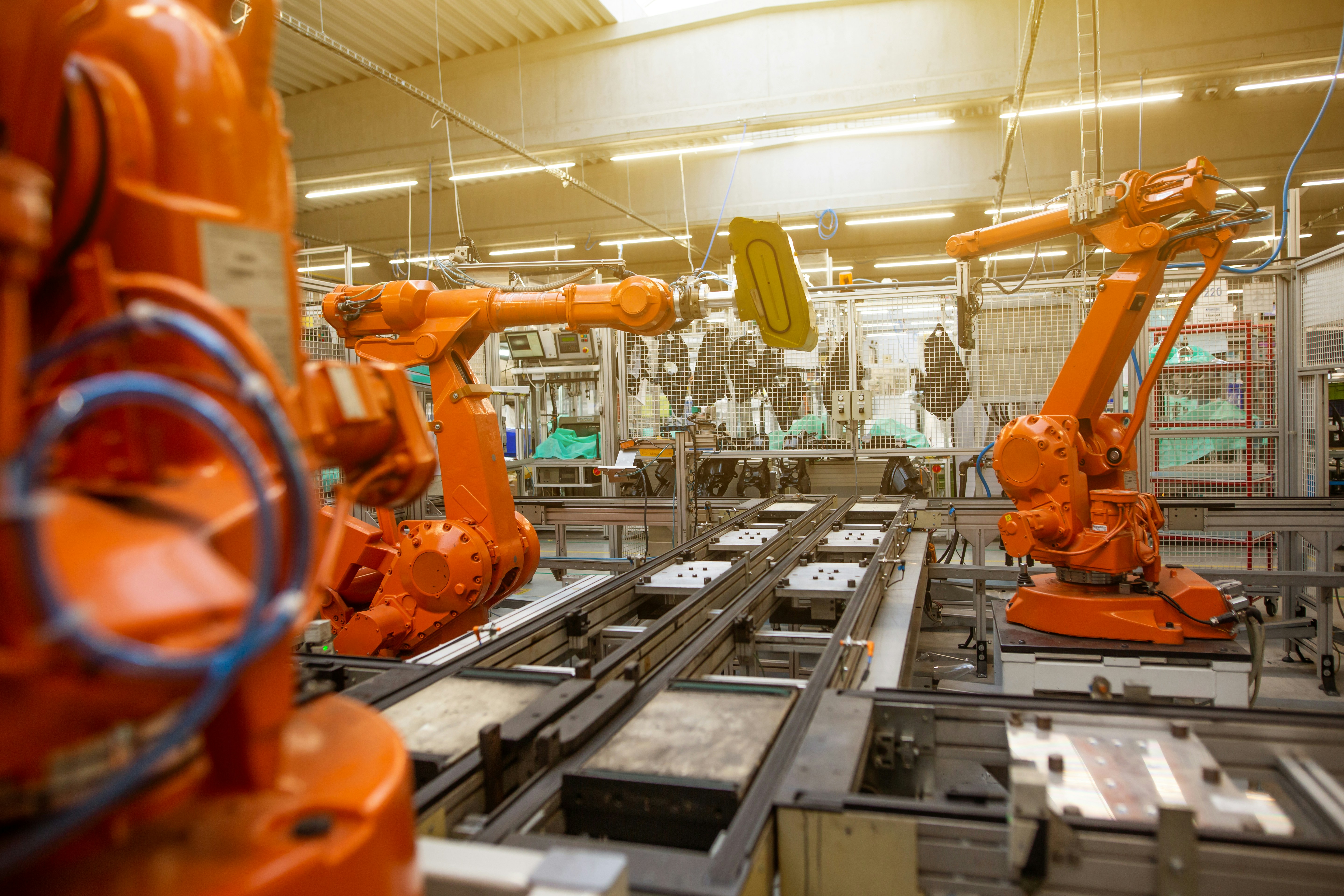
Robotics Recruitment Trends 2025 (UK): What Job Seekers Need To Know About Today’s Hiring Process

Summary: UK robotics hiring has shifted from toolbox checklists to capability‑driven evaluation that emphasises deployed systems, safety, reliability and total cost of ownership. Employers want proof you can ship and sustain robots in production—industrial arms & cobots, AMRs/AGVs, field robots, surgical/med‑tech, warehouse automation, inspection & maintenance. This guide explains what’s changed, what to expect in interviews and how to prepare—especially for robotics software engineers (ROS/ROS 2), perception/vision engineers, controls & motion planners, mechatronics & embedded, safety & compliance, test/V&V, DevOps/SRE for fleets, and robotics product managers. Who this is for: Robotics software/perception/controls engineers, mechatronics & embedded, simulation & test, DevOps/SRE for robotics fleets, HRI/UX, safety/compliance, field/commissioning engineers, and product/technical programme managers in the UK.