

Be at the heart of actionFly remote-controlled drones into enemy territory to gather vital information.

Apply Now

Maintenance Engineer

Banbury
3 weeks ago
Applications closed

Related Jobs

View all jobs

Maintenance Engineer

Maintenance Engineer

Maintenance Engineer

Maintenance Engineer

Maintenance Engineer

Maintenance Engineer

Vacancy: Mould Maintenance Technician

Location: Banbury
Hours: Averaging 40.25 hours per week (on a 4-week rotating shift pattern)

£52000-£59000

Pension 4%Employer 5% Employee

Life assurance x4 Salary

Health Insurance

Share Incentive Plan and Profit Share

Employee Discounts and Wellbeing Support

Shift Pattern Overview:

You'll work a mix of day and night shifts over a 14-day period, with an average of 40.25 hours per week. Shifts range between 23 and 57.5 hours per week.

Week 1:
Mon-Tue: 07:00-19:00
Fri-Sun: 19:00-07:00
Week 2:
Wed-Thu: 07:00-19:00
Week 3:
Mon-Tue: 19:00-07:00
Fri-Sun: 07:00-19:00
Week 4:
Wed-Thu: 19:00-07:00 Reporting to: Mould Maintenance Manager

Role Purpose:

Join our high-performing maintenance team and play a vital role in ensuring our moulding plant runs efficiently. You'll use your technical expertise to solve problems, improve uptime, and support continuous improvement projects in a fast-paced manufacturing environment.

Key Responsibilities:

Rapidly diagnose and resolve breakdowns and quality issues.
Program and monitor equipment for optimum performance and output.
Perform planned maintenance as per the TPM (Total Productive Maintenance) strategy.
Support continuous improvement by contributing ideas and participating in projects.
Ensure health, safety, and environmental standards are always met.
Work closely with other departments to improve quality and production efficiency.
Take appropriate action during emergencies and escalate issues as needed.
Maintain high housekeeping standards and adhere to 5S principles.
Provide support in plant layout and facilities planning.✅ What We're Looking For:

Background & Training:Completed apprenticeship in mechanical, electrical, or hydraulic engineering.

Experience in injection moulding is highly desirable.

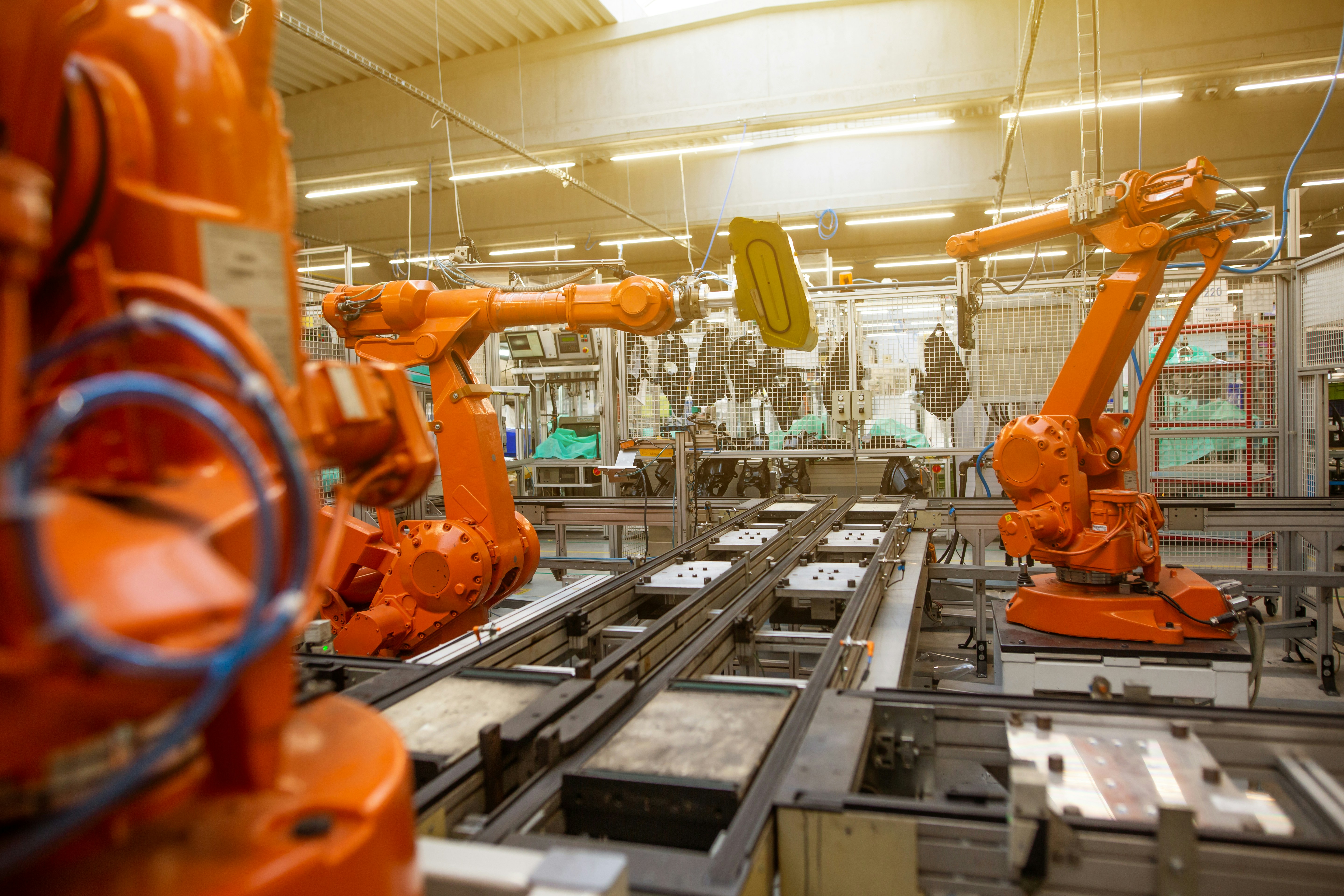
Familiarity with hydraulics, robotics (KUKA, ABB), and PLCs.

Skills:

Strong fault-finding and diagnostic abilities.

Able to work independently and remain calm under pressure.

Confident in writing technical reports and using computer systems (Excel, Access).

Excellent communication and teamwork skills.

Strong attention to detail and safety awareness.

Why Join Us?

Be part of a supportive and innovative team in a key technical role.
Engage in impactful CI (Continuous Improvement) and CIP (Cost Improvement Projects).
A workplace that values your voice - suggestion schemes, open-door policy, and employee engagement initiatives.Ready to take on a dynamic and rewarding challenge in a cutting-edge manufacturing environment?

Apply now to join our team

Subscribe to Future Tech Insights for the latest jobs & insights, direct to your inbox.

By subscribing, you agree to our privacy policy and terms of service.

Industry Insights

Discover insightful articles, industry insights, expert tips, and curated resources.

Robotics Hiring Trends 2026: What to Watch Out For (For Job Seekers & Recruiters)

As we move into 2026, the UK robotics jobs market is in a strange but interesting place. On one hand, UK manufacturers, logistics firms and warehouses must automate to stay competitive, tackle labour shortages and meet productivity and net-zero targets. On the other hand, the UK still lags badly behind peers in robot adoption, with relatively low robot density in factories compared with other advanced economies – which is both a challenge and a massive opportunity. The National Robotarium +1 Add in AI, computer vision and edge computing, and you get a robotics landscape that is: More selective in hiring. More focused on real operational outcomes. More integrated with software, data and safety standards. Whether you are a robotics job seeker planning your next move, or a recruiter building automation and robotics teams, this guide explores the key robotics hiring trends for 2026.

Robotics Recruitment Trends 2025 (UK): What Job Seekers Need To Know About Today’s Hiring Process

Summary: UK robotics hiring has shifted from toolbox checklists to capability‑driven evaluation that emphasises deployed systems, safety, reliability and total cost of ownership. Employers want proof you can ship and sustain robots in production—industrial arms & cobots, AMRs/AGVs, field robots, surgical/med‑tech, warehouse automation, inspection & maintenance. This guide explains what’s changed, what to expect in interviews and how to prepare—especially for robotics software engineers (ROS/ROS 2), perception/vision engineers, controls & motion planners, mechatronics & embedded, safety & compliance, test/V&V, DevOps/SRE for fleets, and robotics product managers. Who this is for: Robotics software/perception/controls engineers, mechatronics & embedded, simulation & test, DevOps/SRE for robotics fleets, HRI/UX, safety/compliance, field/commissioning engineers, and product/technical programme managers in the UK.

Why Robotics Careers in the UK Are Becoming More Multidisciplinary

Robotics used to be the domain of mechanical, electrical and software engineers. In the UK today, robotics is more than motors and control loops — it’s about perception, interaction, trust, regulation and integration into human environments. That evolution means robotics careers are becoming more multidisciplinary. Modern robots interact with people, collect data, operate under constraints, and often assist in safety-critical environments (healthcare, manufacturing, transport). So engineers now collaborate closely with legal, ethical, psychological, linguistic and design experts. In this article, we explore why UK robotics careers are evolving into multidisciplinary roles, how law, ethics, psychology, linguistics & design intersect with robotics, and how job-seekers and employers can adapt to this shift.