Be at the heart of actionFly remote-controlled drones into enemy territory to gather vital information.

Apply Now

Manufacturing Technician

Baginton
1 month ago
Applications closed

Related Jobs

View all jobs

Maintenance Technician

Maintenance Technician

Maintenance Technician

Test Technician

Maintenance Technician

Assembly Technician

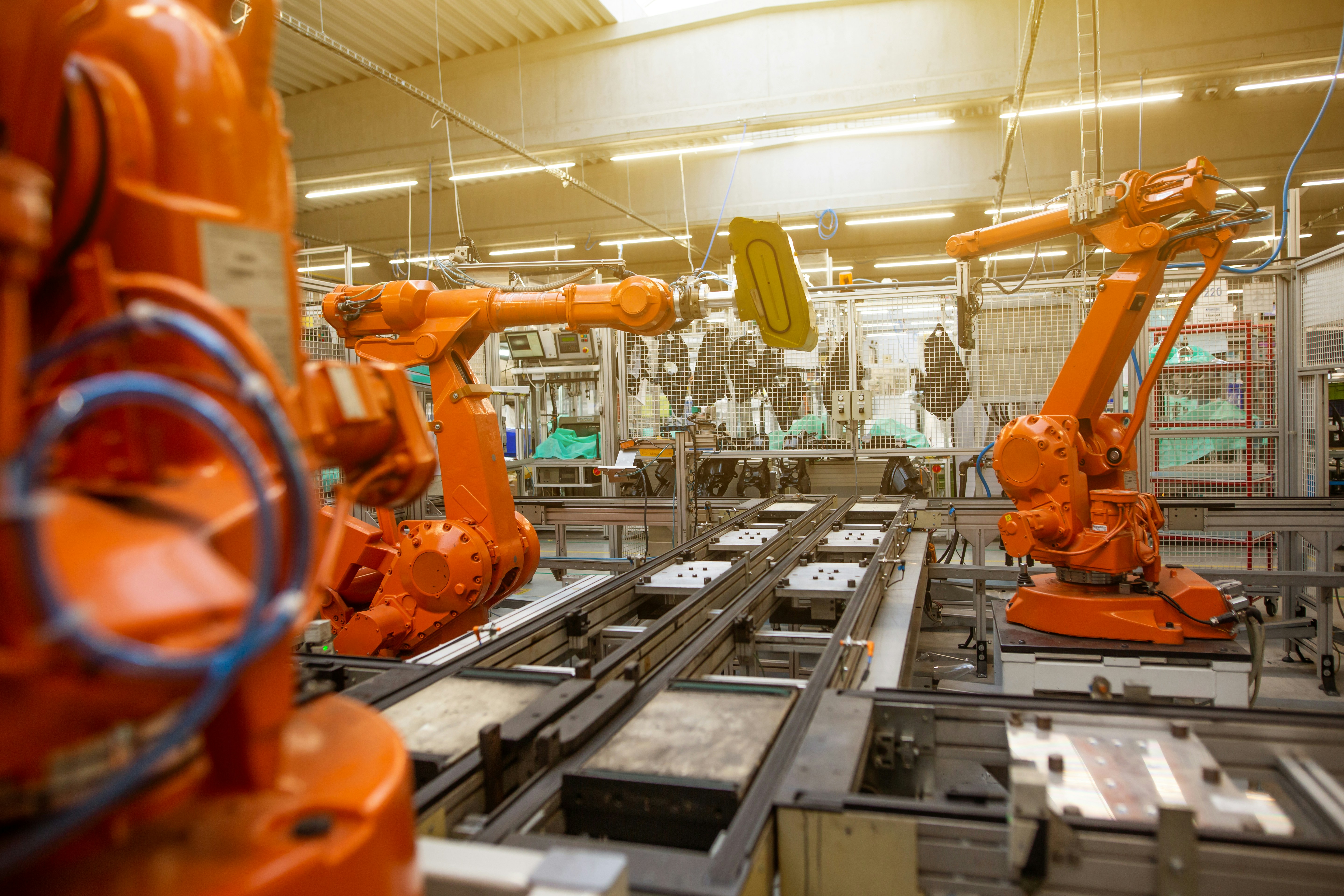
Our client, a cutting-edge lithium-ion battery manufacturing centre, is seeking a Manufacturing Technician to support the production of next-generation battery systems. Working in a state-of-the-art facility, you’ll play a key role in processes spanning electrode manufacturing, cell assembly, and module/pack production, helping to power the future of electric mobility.
  
The Manufacturing Technician will:

Respond to equipment breakdowns and carry out fault diagnosis across a variety of control systems.
Operate and maintain high-precision production equipment in cell assembly.
Perform product validation testing using in-line and off-line equipment.
Undertake TPM and preventative maintenance activities to ensure optimum performance.
Support and lead continuous improvement initiatives for processes and equipment.
Collaborate with manufacturing teams to resolve technical issues and maintain production targets.   
The Manufacturing Technician will have:

Apprenticeship or equivalent qualification in electrical, mechanical, or general engineering (ONC/HNC/HND Level 3 desirable)
Previous experience in maintenance or manufacturing within high-speed, quality-driven environments.
Experience with robotics, automation, or precision manufacturing equipment.
Strong teamwork skills with experience in collaborative problem-solving.
Experience in lean manufacturing within quality-driven, customer-focused production environments.
Practical, hands-on technical background, ideally with an electrical or mechanical specialism.   
This is an opportunity to work with world-class technology in a sector at the heart of the UK’s clean energy future. You’ll gain exposure to advanced manufacturing processes, work alongside industry experts, and contribute to a project of national importance.
  
Apply now and be part of the team driving innovation in sustainable battery manufacturing

Subscribe to Future Tech Insights for the latest jobs & insights, direct to your inbox.

By subscribing, you agree to our privacy policy and terms of service.

Industry Insights

Discover insightful articles, industry insights, expert tips, and curated resources.

Robotics Recruitment Trends 2025 (UK): What Job Seekers Need To Know About Today’s Hiring Process

Summary: UK robotics hiring has shifted from toolbox checklists to capability‑driven evaluation that emphasises deployed systems, safety, reliability and total cost of ownership. Employers want proof you can ship and sustain robots in production—industrial arms & cobots, AMRs/AGVs, field robots, surgical/med‑tech, warehouse automation, inspection & maintenance. This guide explains what’s changed, what to expect in interviews and how to prepare—especially for robotics software engineers (ROS/ROS 2), perception/vision engineers, controls & motion planners, mechatronics & embedded, safety & compliance, test/V&V, DevOps/SRE for fleets, and robotics product managers. Who this is for: Robotics software/perception/controls engineers, mechatronics & embedded, simulation & test, DevOps/SRE for robotics fleets, HRI/UX, safety/compliance, field/commissioning engineers, and product/technical programme managers in the UK.

Why Robotics Careers in the UK Are Becoming More Multidisciplinary

Robotics used to be the domain of mechanical, electrical and software engineers. In the UK today, robotics is more than motors and control loops — it’s about perception, interaction, trust, regulation and integration into human environments. That evolution means robotics careers are becoming more multidisciplinary. Modern robots interact with people, collect data, operate under constraints, and often assist in safety-critical environments (healthcare, manufacturing, transport). So engineers now collaborate closely with legal, ethical, psychological, linguistic and design experts. In this article, we explore why UK robotics careers are evolving into multidisciplinary roles, how law, ethics, psychology, linguistics & design intersect with robotics, and how job-seekers and employers can adapt to this shift.

Robotics Team Structures Explained: Who Does What in a Modern Robotics Department

Robotics is transforming manufacturing, healthcare, logistics, agriculture, entertainment and more. In the UK, advances in robotics span autonomous mobile robots (AMRs), robotic arms, surgical robotics, drone systems, human-robot interaction, and collaborative robots (cobots). Building effective robotics systems requires not only strong hardware and software, but also finely coordinated teams with clear roles from research through deployment and maintenance. If you’re a candidate applying for robotics roles or an employer hiring through RoboticsJobs.co.uk, this guide will help you understand who does what in a mature robotics department, how the lifecycle of a robotics product works, what skills and qualifications UK employers typically expect, what salaries look like, common challenges, and best practices for structuring teams that deliver.