Robotics technician jobs UK: how to get in without a degree
Robots need people to keep them running. Here's how to become a robotics maintenance technician in the UK, with or without a degree.
By Julie Fixter, Client Partnership Consultant, Future Tech Jobs
Who keeps the robots running at 3am?
A robotics maintenance technician. And right now, UK employers are hiring them.
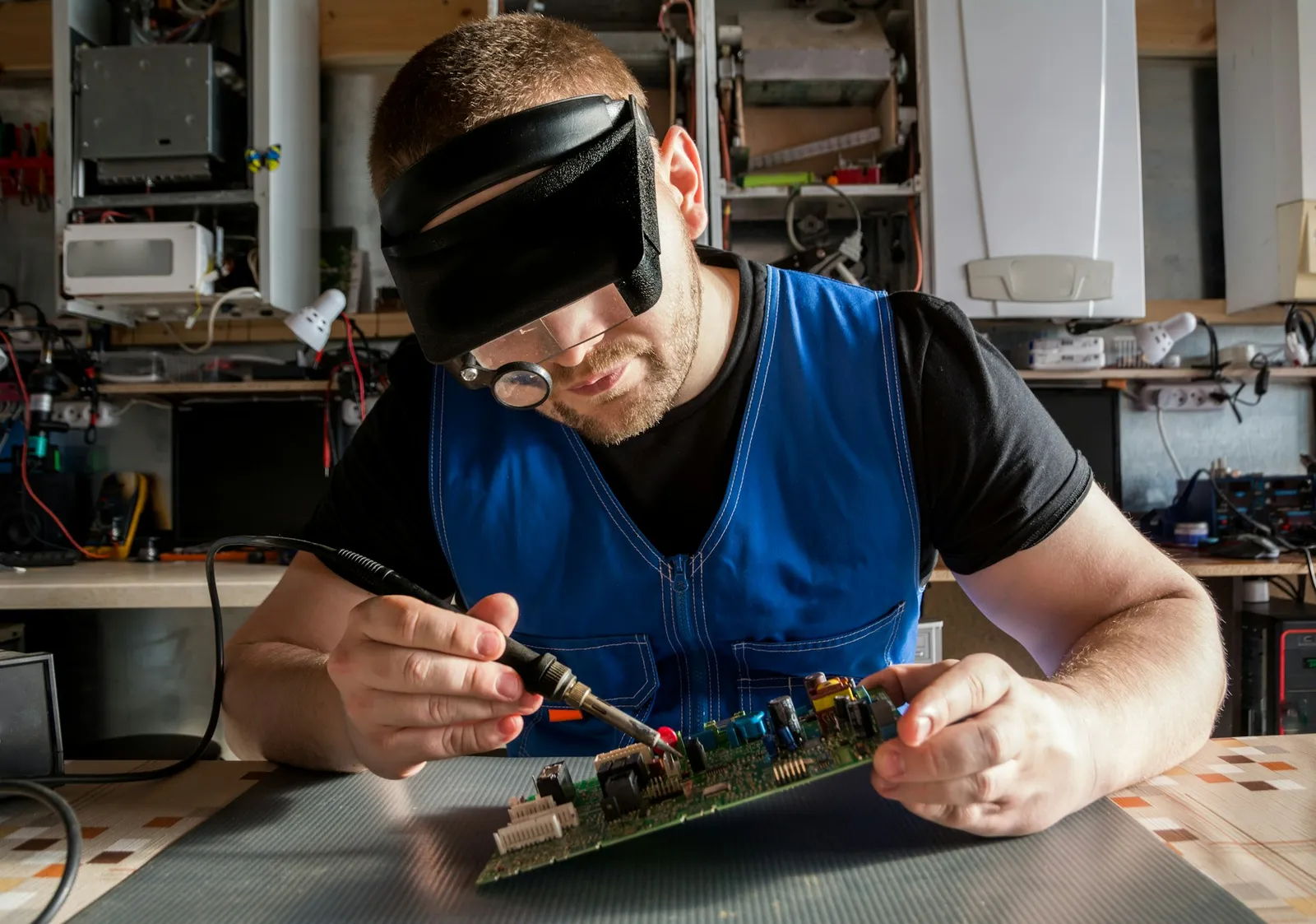
A robotics maintenance technician keeps automated systems working: robot arms, conveyors, warehouse robots and the control systems behind them. You fix breakdowns, run planned maintenance and work out why something failed so it doesn't fail again. You don't always need a degree. Apprenticeships, college courses and hands-on maintenance experience all lead in, and employers including Amazon and Ocado are advertising these roles on Robotics Jobs this month.
Here's what the job involves, what it pays and how to get your foot in the door.
What does a robotics maintenance technician do?
Short version: you're the person who gets things moving again.
The live adverts on the board describe the same core work:
Responding first when an automated system breaks down
Planned (preventative) and reactive maintenance
Fault-finding and root-cause analysis, so the same fault doesn't come back
Electrical, mechanical and control work, including wiring, hydraulics and PLCs
Helping with installation, commissioning and reliability projects
At Ocado's Engineering Technician role in Purfleet, that means looking after the automation inside a Customer Fulfilment Centre. At Exotec's Robotics Maintenance Technician role in Northampton, it's robots, conveyors and automated warehouse systems at a customer site.
Different buildings. Same mission: keep the robots happy.
Why robotics technicians are in demand
Robots don't maintain themselves. Not yet, anyway.
Every warehouse, factory and fulfilment centre that automates needs people on site who understand the kit. And the UK is pushing hard on automation.
In October, the government announced £40 million for eight Robotics Adoption Hubs, covering areas from surgery and farming to waste, Yorkshire, Milton Keynes and Wales. Alongside that:
£2.5 million is going to 12 projects on practical robotics training, CPD, apprenticeship pathways and outreach
The National Robotarium is working with employers on a study to develop a robotics technician apprenticeship
Teesside University and DarbyTech are working on training for industrial inspection and maintenance
The same announcement cites estimates that robotics and autonomous systems could add £150 billion to the UK economy by 2035 if adoption is maximised, against £6.4 billion at current levels.
The message is clear: the gap between those two numbers is going to be closed by people. A lot of them will be technicians.
Who's hiring robotics technicians in the UK right now?
Here's a snapshot of live roles on the board, for anyone who likes their options laid out neatly:
Amazon, RME Mechatronics Apprentice. Posted 6 November in several regions, including the North West (Manchester) and the East (Dunstable). A 36-month programme working on automated equipment in Amazon sites.
Ocado, Engineering Technician. Roles in Purfleet and Bristol, on 12-hour shifts across days, nights and weekends, with pension matching up to 7%.
Exotec, Robotics Maintenance Technician, Northampton. Maintaining robots and automated warehouse systems, with 25 days' holiday and private healthcare.
Humanoid, Robotics Engineer (Night Shift), London. Running a fleet of humanoid robots and the data collection behind them. This one asks for a degree, ROS and Linux, so it's a step up rather than a starting point. Humanoid has dozens of roles open on the board.
Retail, logistics, warehouse automation and humanoid robots. If you like variety, this corner of robotics has plenty.
Can you become a robotics technician without a degree?
Yes. For most technician roles, a degree is not the entry ticket.
Amazon's apprenticeship advert says you don't need to be a qualified engineer to start. Ocado says a formal engineering qualification is preferred, which is a long way from "degree essential". Exotec's advert does list a degree, so always read the requirements before you apply.
The common routes in are:
An apprenticeship. The National Careers Service lists the Level 3 Engineering Maintenance Technician and Level 3 Mechatronics Maintenance Technician apprenticeships. Amazon's programme leads to an Advanced Apprenticeship in Engineering (Mechatronics Maintenance), with HNC study from the second year and a 12-month residential programme at the start.
College. A T Level in Maintenance, Installation and Repair, or an HNC or HND in electrical, mechanical or mechatronic engineering.
Moving across from maintenance. If you already maintain production lines, packaging machines or plant, you're closer than you think. Robots are still motors, sensors, wiring and controls.
Leaving the forces. Military engineering and electronics experience translates well. Our guide to moving from the military into robotics covers this in more detail.
Your hands-on skills count. Robots just give them a new place to shine.
What skills do robotics technician employers want?
Pulling the live adverts together, employers keep asking for:
Electrical and mechanical fault-finding
PLCs and control systems
Planned and reactive maintenance
Root-cause analysis
Comfort with shift work, and in Ocado's case, working at height
For more advanced roles, Linux, ROS and some Python or C++
If PLCs are your weak spot, start there. They come up again and again, and our controls engineer guide is a good next step once you've got the basics.
How much do robotics technicians earn in the UK?
Most of the live technician adverts on the board don't show a salary, so national data is the best guide.
The National Careers Service puts engineering maintenance technicians on £27,000 as a starter, rising to £48,000 with experience. Robotics engineers are listed at £31,000 to £60,000, and that profile notes you can start out as a robotics technician or junior engineer.
Shift allowances, overtime and benefits often sit on top, so look at the whole package, not just the headline number.
What candidates really want from a move
Here's something I believe about niche tech hiring: the best people aren't scrolling job ads. They're choosing between offers.
That applies to you too. Skilled technicians are in short supply, so you get to be choosy.
Think about what actually matters to you. The shift pattern. Training that leads somewhere. A team that wants you to grow from technician into engineer. Candidates tend to pick the companies they already know, so get to know the employers in this space before you need them.
Don't wait for the vacancy. Be ready when it lands.
If you've got questions about getting into robotics, I'd love to hear them. Drop me a message any time.
FAQ
Do you need a degree to be a robotics technician?
Usually not. Many employers accept an apprenticeship, college qualification or hands-on maintenance experience. Some adverts do list a degree, so check each one.
How long does a robotics or mechatronics apprenticeship take?
Amazon's RME Mechatronics Apprentice programme is 36 months, starting with a 12-month residential programme and adding HNC study from the second year.
What is the difference between a robotics technician and a robotics engineer?
Technicians focus on keeping systems running: maintenance, fault-finding and repairs. Engineers tend to design, program and improve systems. Many engineers start as technicians.
How much does a robotics technician earn in the UK?
The National Careers Service lists engineering maintenance technicians at £27,000 to £48,000, and robotics engineers at £31,000 to £60,000.
Find your next robotics technician role
The right role, the right board, the right people. Here's where to start:
Set up a job alert for technician roles, so new adverts come straight to you
Upload your CV and let employers find you
Read our guide to robotics apprenticeships
The robots are ready. The question is whether you are.
About the author

Julie Fixter is a Client Partnership Consultant at Future Tech Jobs, helping employers and recruitment partners reach specialist talent across AI, quantum, robotics, semiconductors, space and the rest of the FTJ network. She spent seven years in sales at a UK software house before joining FTJ, and trained in psychodynamic counselling, which shapes how she thinks about what candidates actually want from a move. Based in Manchester. Connect with Julie on LinkedIn.